
Fiberglass mesh tape specifications: mesh count, weight and adhesive
17 November 2026 · GOPEX technical notes
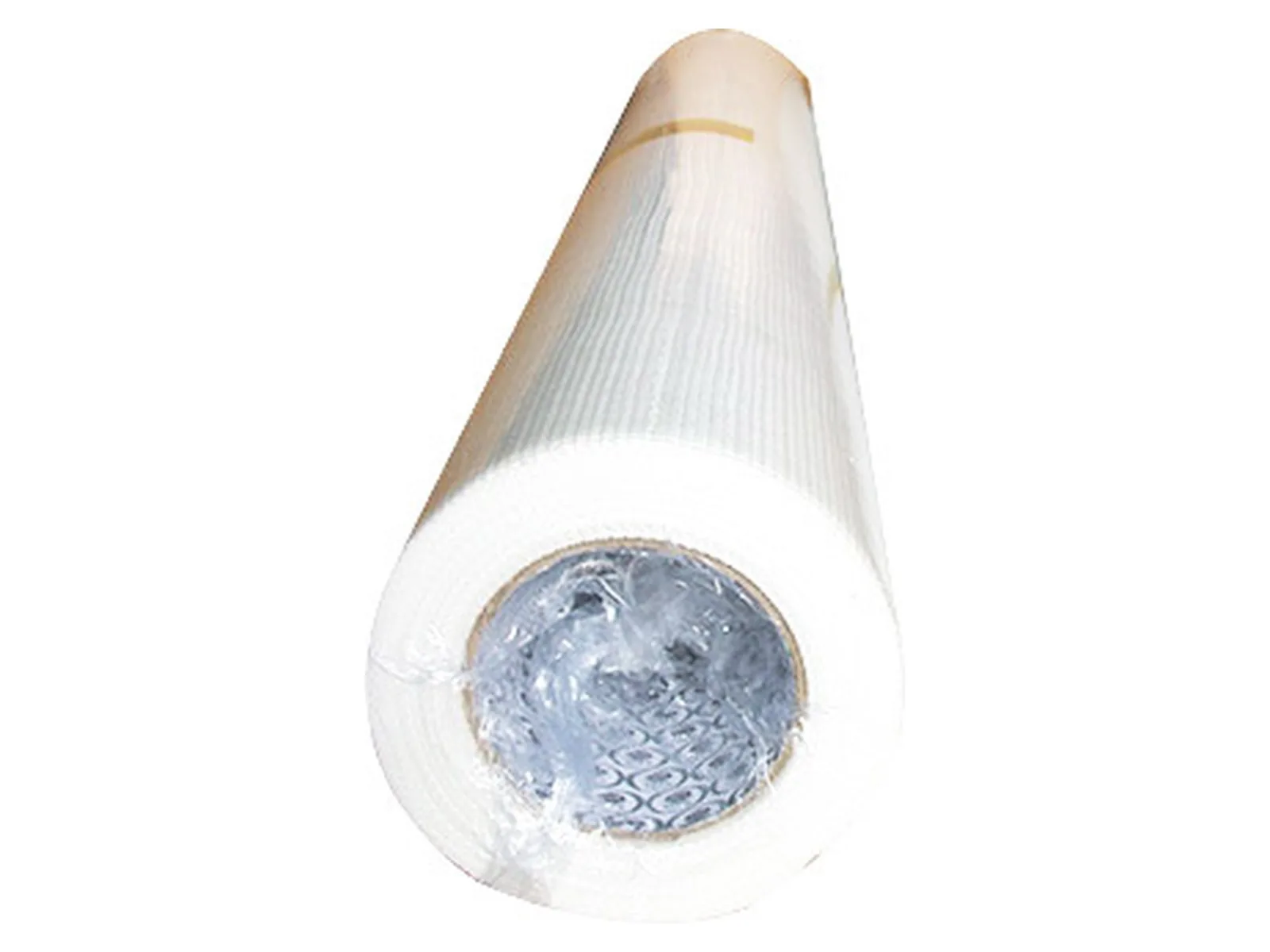
Two suppliers can quote the same “8x8, 65 g/m²” mesh tape and ship products that feel different on the trowel. The figures on the data sheet are real, but they leave out the variables that decide how the tape behaves: coating weight against fabric weight, adhesive type and coat weight, slit tolerance, and the way the roll is wound. This guide explains what each line of a fiberglass mesh tape specification controls, so that offers can be compared on the same basis.
1. Mesh count: what 8x8 and 9x9 mean
The first figure is the number of warp yarns per inch, the second the number of weft yarns. 8x8 means eight yarns each way in 25.4 mm; 9x9 means nine. Count is usually quoted per inch in the export trade, but some factories count per 10 cm, which turns the same cloth into “32x32”. Confirm the unit before comparing two offers.
Count on its own does not set strength. Yarn linear density and the loom state of the fabric matter as much, so a 9x9 cloth built from finer yarns can weigh roughly the same as an 8x8 built from heavier ones. What count does change predictably is the aperture: a tighter grid gives a better keying surface and prints through a thin skim coat less readily, while a wider opening wets out faster and conforms to uneven substrates.
Our self-adhesive joint tape is made in both constructions, 8x8 and 9x9, in 50 mm standard width.
2. Weight per square metre — and what is included in it
Weight is the figure buyers compare most and suppliers describe most loosely. Ask whether the number refers to the greige fabric, the coated fabric, or the finished self-adhesive roll with its release liner. The same product can be presented as three different weights depending on what is counted, and the gap between them is several grams. Write the basis on the order, or the comparison means nothing.
Our data sheets quote 60 g/m² for the 8x8 and 65 g/m² for the 9x9 joint tape, and 70 g/m² for the 9x9 wide adhesive mesh used in wall reinforcement. The basis is stated on the quotation for each order.
Weight is a useful proxy for strength and opacity, not a guarantee of either: a heavy open cloth can pull apart in tension before a lighter, denser one. That is why we test tensile strength on a retained sample instead of quoting weight alone.
3. The adhesive: type, coat weight and grab
The adhesive decides what happens in the first thirty seconds on site, which is when a joint is either set or lost. Three parameters belong in the specification:
- Type. Hot-melt adhesives give a fast initial grab and are the normal choice for interior drywall work. Solvent acrylic adhesives hold better on dusty or cold boards and in high-humidity climates, at a higher cost and with more open time.
- Coat weight. Ask for it in g/m². A percentage of the finished tape hides differences in liner and fabric weight; our wall-patch specification, for example, states an adhesive weight of 30% or more. Under-coated tape can still pass a bench test and lift at the edge on a dusty site board.
- Release liner. Silicone-coated paper protects the adhesive in the carton. Too much release force pulls the tape back off the wall; too little and the roll unwinds inside the box.
Storage matters as much as construction. Cartons kept flat, dry and below 30 °C hold their grab for at least twelve months; a pallet left in the sun on the quay is a different product on arrival.
4. Width, length, core and slit tolerance
50 mm (2 in) is the standard width for hand taping, with 100 mm and wider used for reinforcing. Automatic taping tools take the same nominal widths but tolerate less width error, so state the slit tolerance: ±1 mm is the usual figure on a 50 mm roll, and a roll that measures 48 mm will jam a taper's feed wheel.
Lengths are normally 20, 45, 90 or 150 m (65, 150, 300 or 500 ft). Longer rolls cut changeovers on large projects but weigh more, and a heavy roll hung on a tool can pull away from the board. Core diameter and wind tension belong on the sheet too: a loose wind telescopes in the carton, a tight wind makes the first metre difficult to start.
5. Five checks before the container is loaded
None of this has to be taken on trust. One carton and ten minutes are enough to confirm a batch:
- Weigh one roll and compare it with the nominal weight for its length.
- Count the yarns over 25 mm with a rule and a magnifier, in both directions.
- Stick a 300 mm strip to scrap plasterboard, press it down, and try to lift a corner after a minute.
- Measure the width at three points along the roll.
- Check the carton count against the packing list and the pallet label against the SKU.
These are part of our ISO 9001 inspection routine, and we photograph finished pallets before loading on request. Certificates and test reports, including ASTM C475 reports for joint tape and compound systems and the ISO 9001:2015 certificate (no. USA22Q42393R3M), are published on the certifications page.
6. Packing and container maths
Packing moves freight cost per roll more than most buyers expect. A 50 mm x 90 m roll packs 24 to a carton; at that packing a 20GP takes 1,080 cartons of 8x8 tape and 1,000 of 9x9, and a 40HQ takes 2,475 and 2,370. Shorter rolls pack more rolls per carton but fewer cartons per container, so the cheapest roll on paper is not always the cheapest landed. The table on our home page gives rolls per carton and container counts for every size we produce; we re-confirm the figures in each quotation, because carton dimensions change with print and liner options.
7. A specification that survives the quote round
Send these nine lines and three factories will quote the same product: mesh count per inch; weight per square metre and the basis it is measured on; adhesive type and coat weight; roll width and length; core diameter; rolls per carton; carton dimensions; print and label requirements; pallet pattern. Without them, every offer is an assumption, and the cheapest one is usually the one that assumed the least.
Comparing mesh with paper?
If the question is which reinforcement to use rather than how to specify it, the comparison in paper versus mesh tape sets out where each one fails. The order-stage checklist in sourcing drywall tape from China covers documents, packing and the timeline from artwork approval to loading. Send your specification to our export desk and we will confirm construction, carton count and the earliest loading date.
Related guides.
How to choose the right joint tape for drywall
Mesh, paper or steel-reinforced? A practical comparison of the three joint tapes used on plasterboard, and the jobs each one is actually best at.
Read article 2 September 2026Paper tape vs mesh tape: a contractor's comparison
Strength, speed, build and cost compared side by side — and the four situations where the cheaper option is the wrong one.
Read article 21 July 2026Metal corner tape: straight, crack-free corners
A step-by-step method for installing flexible metal corner tape, plus the three mistakes that cause cracked or wavy corners.
Read articleSend your specification. We aim to quote within two working days.
Tell us the product, roll size, packing and destination port. We will confirm the matching construction, the MOQ and the earliest loading date.